What an NFT ticket changes
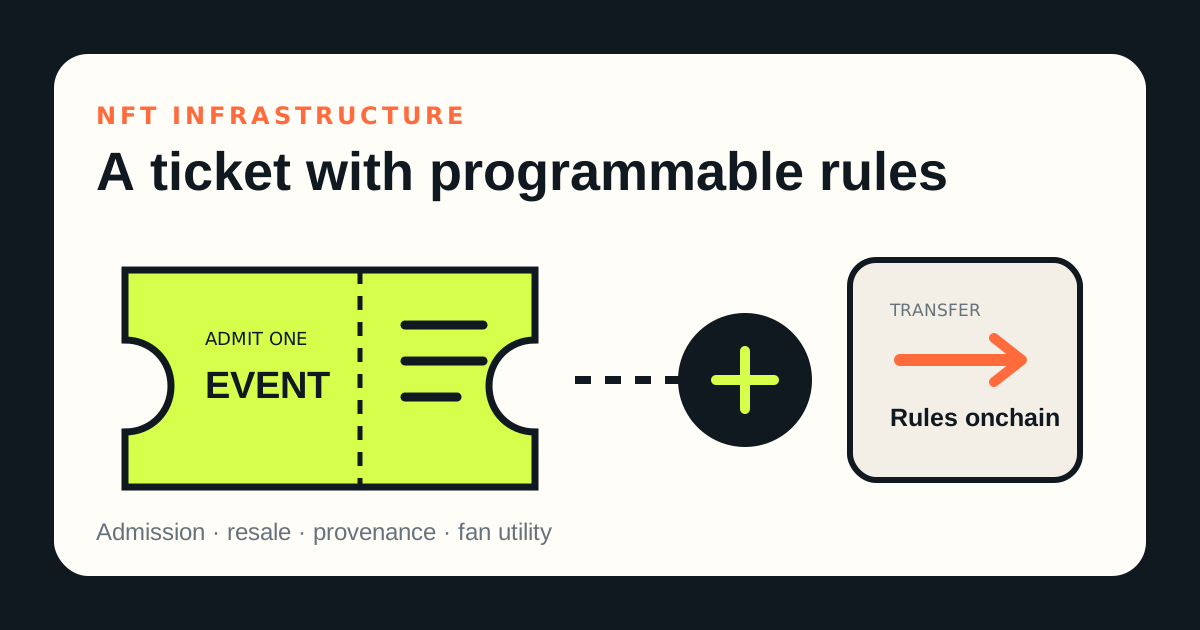
A conventional digital ticket is already a unique database record, so blockchain does not create uniqueness from nothing. The difference is that an onchain ticket can exist as a token controlled by a wallet and can carry programmable rules or metadata that survive beyond the initial checkout. That can make the ticket useful as a collectible, access credential or building block for later fan experiences. Sources: OPEN Ticketing Ecosystem — infrastructure and onchain issuance API
OPEN, an onchain ticketing infrastructure provider, describes APIs that allow ticketing integrators to issue tickets onchain with event data and other metadata. Its infrastructure also uses embedded wallets so an attendee does not necessarily need to understand seed phrases or blockchain transactions just to receive a ticket. That abstraction is important: a ticketing system becomes worse, not better, if Web3 complexity is pushed onto every buyer. Sources: OPEN Ticketing Ecosystem — infrastructure and onchain issuance API
For a quick reference on smart contracts, wallets and onchain records, use our blockchain glossary.
Resale rules and anti-scalping controls
One of the strongest theoretical advantages is programmable transfer. Organizers can design rules for secondary sales, royalties, price limits or approved marketplaces. A public ledger can also make the state of a ticket easier to inspect, while a controlled ticket contract can invalidate or update an asset after it is used. Sources: OPEN Ticketing Ecosystem — infrastructure and onchain issuance API
But smart contracts do not magically remove scalping. Rules have to be designed and enforced in the actual ticket flow, and off-platform arrangements can still exist. The useful gain is that an organizer can make more of the resale policy explicit in software instead of relying entirely on a closed database and contractual terms that fans cannot inspect. Sources: OPEN Ticketing Ecosystem — infrastructure and onchain issuance API
Ticketmaster and the NFL showed another use case
Not every ticket NFT needs to be the admission credential itself. Ticketmaster and the NFL used virtual commemorative ticket NFTs as post-entry collectibles. Ticketmaster reported that more than 500,000 complimentary virtual ticket NFTs were distributed during the 2021 NFL season and that the program expanded to more than 100 selected games in 2022. Sources: Ticketmaster — NFL virtual commemorative ticket NFT expansion
That model separates access from collecting. The fan uses the normal mobile-ticket system to enter, and scanning the ticket can make the attendee eligible for a digital keepsake. This lowers operational risk because the stadium does not need the NFT transfer layer to be the critical admission system, while still testing whether fans value persistent digital memorabilia. Sources: Ticketmaster — NFL virtual commemorative ticket NFT expansion
You can also follow our latest blockchain infrastructure analysis for current implementations and security developments.
Where NFT ticketing still has to prove itself
The technology does not decide whether fees are fair, whether customer support works, whether organizers have market power or whether a resale policy is consumer-friendly. It can make rules more transparent and programmable, but bad rules can also be encoded. Wallet recovery, privacy, account abstraction and interoperability remain product problems that need deliberate design. Sources: OPEN Ticketing Ecosystem — infrastructure and onchain issuance API
The best test is therefore practical: does putting the ticket onchain remove friction or create a useful capability that the existing system struggles to provide? Persistent event history, programmable resale and post-event access can pass that test. Forcing every attendee to become a crypto user usually does not. NFT ticketing is an advantage when the blockchain stays underneath a better ticket experience rather than becoming the experience itself. Sources: Ticketmaster — NFL virtual commemorative ticket NFT expansion; OPEN Ticketing Ecosystem — infrastructure and onchain issuance API
Onchain tickets can also connect to event financing — a different use case
OPEN’s documentation describes an event-financing model in which future ticket revenue can repay financing pools. That is distinct from an attendee receiving an NFT souvenir and should not be described as an automatic NFT-holder dividend. It does show how ticket records can be connected to broader financial workflows around an event. Sources: OPEN Ticketing Ecosystem — event financing model
Once financing enters the design, the diligence burden changes. Participants need to understand who controls the contracts, how ticket revenue flows, which terms can change and what happens if sales disappoint. Onchain records can make some flows more inspectable; they do not remove counterparty, execution or legal risk. Sources: OPEN Ticketing Ecosystem — event financing model
Sources and references
These references support factual and historical claims in the article. Company and project-controlled sources are used for their own product statements; they are not treated as independent proof of superiority, safety or investment value.